
12 Japanese Inventions That Should Exist Everywhere in the World
Key Takeaways & Executive Summary
Sustainable systems aren't about buying more products or doing heavy cleaning every day. Instead, they focus on simple, friction-free daily habits that prevent clutter and keep order effortlessly!
Japan has things that should already exist everywhere in the world. Not the future, not ideas, but things that already exist right now. Small inventions that solve problems you face every day in ways so simple. It almost feels unreal. And when you see them, you realize something. The world is making everything harder than it needs to be. And the last
in this video isn't just convenient
It could save your life someday. The world still feels normal. You touch dirty surfaces every day, wait for things that shouldn't require waiting, and accept inconvenience, as if that's just how things are. But in Japan, those moments have been completely redesigned. Let's start with something no

likes to talk about, but everyone understands
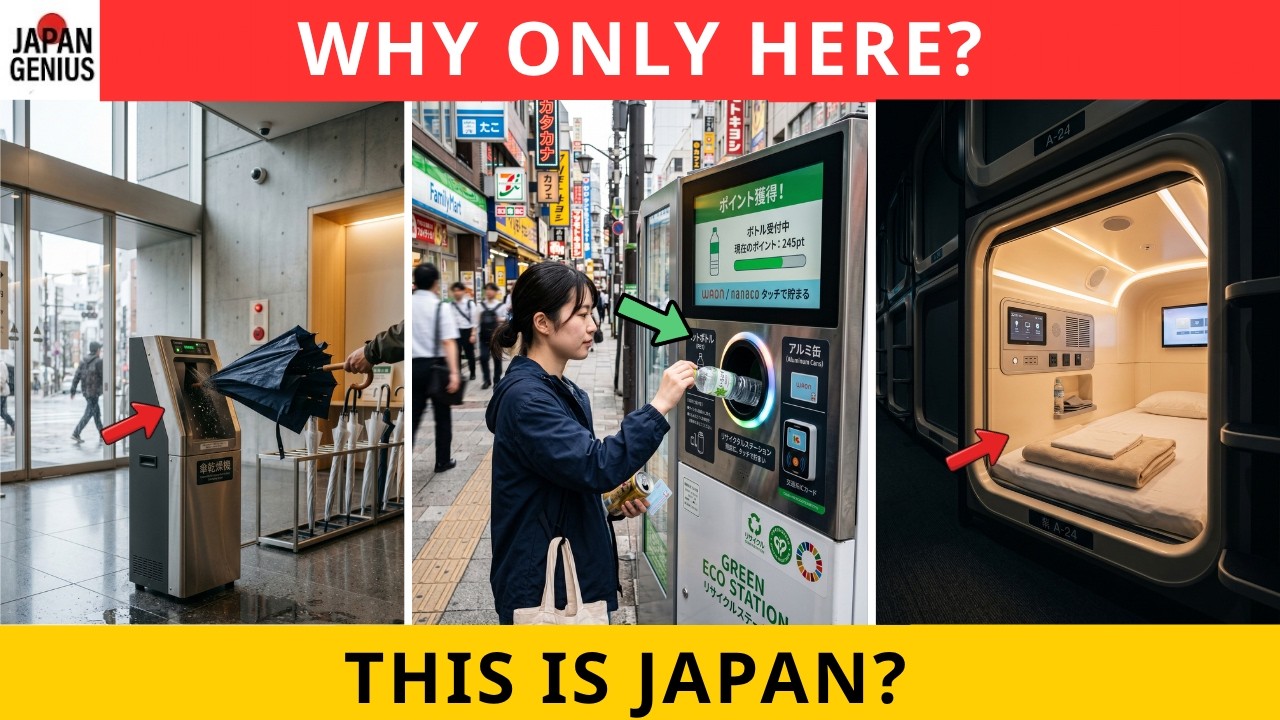
Public restrooms. In most parts of the world, they're awkward. You walk in, check every door, hesitate, maybe knock, hoping you're not disturbing anyone. And even when you're inside, there's always this quiet tension. Every sound feels louder than it should. So, what do people do. They flush again and again just to cover the noise, wasting water, just to feel a little less embarrassed. Japan noticed that. And instead of telling people to stop, they asked a better question. What if we remove the problem entirely. So they added a button, a simple button. Press it and the toilet plays the sound of running water. Loud enough to give you privacy, but without wasting a single drop. No stress, no awkwardness, no waste. And when you step out, you don't have to guess which stall is available. You just look down because the floor tells you a soft light. Red means occupied. Green means available. No knocking, no guessing, no hesitation. It's a small change, but suddenly an uncomfortable experience becomes effortless. Because in Japan, they don't ignore human behavior. They design around it. And once you notice that, you start seeing it everywhere, even on a rainy day. In most countries, rain follows you inside. Umbrellas dripping, wet floors, people slipping, awkward moments when your umbrella bumps into someone. It's chaotic. And somehow we accept it. Japan doesn't. At the entrance of buildings, you'll find something almost invisible, a compact machine. You place your umbrella inside and within seconds, high-speed air removes every drop of water. Clean, dry, done. Right next to it, another machine wraps your umbrella in a thin cover. No struggle, no plastic bags that won't open, no mess. Just like that, the rain stays outside. It's not a revolutionary invention, but it solves a problem that happens millions of times every day. And that's the pattern. Japan doesn't chase flashy innovation. They fix small frustrations, the kind that slowly drain your energy. But convenience is just the beginning. Because the next thing they optimize is something even more valuable. Your time. Imagine this. You miss the last train. It's late. Hotels are expensive. And all you really need is a place to sleep. In most parts of the world, you don't have many options. In Japan, this problem doesn't exist because they asked a simple question. What is a hotel actually for. The answer isn't space. It's not luxury. It's sleep. So, they removed everything else. Welcome to capsule hotels. No large rooms, no unnecessary furniture, just a compact pod, perfectly designed for
purpose
rest. Inside you have a mattress, a light, charging ports, a small screen, everything you need and nothing you don't. You don't wander around. You don't stay all day. You enter, you sleep, you leave. And because of that, it's far more affordable, cleaner, more efficient. What sounds limiting actually feels freeing because Japan understands something most places don't. You don't need more space. You need better purpose. And that same idea continues through the workday. Because the truth is everyone gets tired, focus drops, mistakes happen, productivity crashes. In most countries, the solution is simple. Drink more coffee. Push harder. Pretend you're not tired. Japan does something different. They let you sleep. Not at home, not after work, but right there in the middle of your day. Nap pods. Small, quiet, enclosed spaces. Designed for

purpose
A perfect 20-minute reset. You step inside. Lights dim. Soft ambient sound. Complete silence. You close your eyes. and disappear from the world. No judgment, no guilt, no explanation needed. And when you wake up, you're sharper, clearer, faster. Because instead of fighting human limits, Japan works with them. Rest is not weakness, it's maintenance. And then they apply that philosophy even to something as simple as waiting. Because waiting is
of the most universal frustrations
Standing at a bus stop under the sun, in the cold, in the rain, doing nothing, feeling every

pass
Most places accept it. Japan redesigns it. Bus stops become shelters. Not just a roof, but a controlled environment. In winter, heated seats keep you warm. In summer, cool air flows gently through the space. Glass panels block wind and filter harsh sunlight. You step inside and instantly the outside world fades away. Waiting no longer feels like wasted time because if you have to wait, Japan believes you shouldn't have to suffer while doing it. And by now, a pattern starts to emerge. They don't just build technology, they build experiences that remove friction from everyday life. And this is where things get really interesting because instead of asking people to change, Japan does the opposite. They change the system so people naturally behave better. Take a simple example, recycling. In most countries, everyone knows it matters, but very few actually do it because it's inconvenient. There's no clear reward and no
wants the extra effort
Japan understands that. So, they don't say, "Be more responsible." They say, "All right, we'll pay you." Reverse vending machines. You don't buy anything. You put things in. plastic bottles, aluminum cans, glass bottles. The machine scans each item, sorts it, and when you're done, it gives you a reward. Cash, points, or discounts. Suddenly, something you should do becomes something you want to do. Kids start picking up bottles. Adults collect points. Even people who don't care about the environment join in because the system turns good behavior into beneficial behavior. And that same logic shows up again in a very modern problem. Delivery. You order something, you wait, you step out for a moment and we tried to deliver your package or worse, it disappears in many places and that's normal in Japan. It almost never happens. Because they don't make you wait for the package. They let the package wait for you. Smart delivery lockers. The courier arrives, places your item inside, locks it, and the system sends you a code. You get home, open the locker, take your package, no time pressure, no risk of theft, no dependency on the delivery person. Everything happens on your schedule. And that's the difference. In Japan, the system adapts to people, not the other way around. But there's something even more powerful than technology. Trust. In rural Japan, you might come across something unusual. A vending machine with no staff, no visible supervision. Inside, fresh eggs. You walk up, choose a box, put money in, and take it. Simple. No

checks you, no
watches you, and almost no

cheats
Because in that system, honesty is the default. And when trust becomes the foundation, everything becomes much simpler. Even the smallest things like a chocolate bar. In many places, it's just a snack. In Japan, it becomes an experience. KitKat. Not just
flavor, not just

but hundreds
Matcha, sakura, sweet potato, wasabi, sake. Each region its own flavor. People don't just buy them to eat. They buy them as gifts to collect, to experience. A simple product becomes part of a culture. Because Japan understands value isn't in what you sell, but in how you make people feel. But even all of this isn't the most impressive part. Because when it comes to what truly matters, Japan doesn't just optimize, they prepare for the worst. Heavy rain, typhoons, floods. In many countries, that's a disaster. In Japan, it's already planned for beneath Tokyo. It's not just subways. It's a massive underground system. Giant tunnels built to redirect flood water. A space so large it feels like an underground cathedral. When the water rises, it flows in, then gets pumped safely into rivers. No panic, no chaos, just a system doing exactly what it was designed to do. And even inside your home, that thinking continues. Earthquakes happen. In many places, things fall apart. In Japan, furniture moves but doesn't collapse. Earthquake resistant shelves. They don't stay rigid. They shift slightly with the movement of the ground, reducing force, maintaining balance. Instead of fighting nature, they move with it. And then the final question, what if everything stops. No electricity, no stores, no immediate help. What do you eat in Japan. The answer is already there. Canned bread. Not hard emergency rations, but real bread, soft, ready to eat, and it can last 3 to 5 years. You open the can and eat. No preparation, no cooking, just survival. And when you step back and look at all of this, you realize something. Japan isn't ahead because of technology. They're ahead because of how they think. They don't ask what can we build. They ask what actually causes friction and how do we make it disappear. Every small detail, every moment rethought, refined until life feels effortless. The world doesn't lack solutions. It lacks the mindset Japan has. And if you want to explore more ideas like this, follow Japan Genius.
Summary: The Conventional Habit vs. The Japanese System
| Bathroom Routine | Conventional Habit | 🇯🇵 Japanese System |
|---|---|---|
| Shampoo & Soap Storage | Sitting on shower ledge | Elevated hanging draining racks |
| Bath Towel Material | Thick fluffy plush towels | Lightweight quick-drying Tenugui weaves |
| Toothbrush Drying | Stagnant cup on sink counter | Wall-mounted vertical individual clips |
| Personal Hygiene | Disposable flushable wipes | Warm water Bidet / Washlet spray |
| Cleaning System | Deep clean with 10 chemical bottles | 1-minute daily preventative micro-wipe |
Which Item Will You Remove First?
Creating a cleaner bathroom isn't about buying more products. It's about designing a space that stops dirt and moisture before they start!