
12 Japanese Kitchen Habits That Prevent Grime Before It Starts
Key Takeaways & Executive Summary
Sustainable systems aren't about buying more products or doing heavy cleaning every day. Instead, they focus on simple, friction-free daily habits that prevent clutter and keep order effortlessly!
Most people clean their kitchen after it gets dirty. Grease hardens, food dries, water leaves stains, and suddenly a 5-
mess becomes a 30inut cleaning job
But what if you could stop most of that buildup before it became a problem. In Japan, a simple approach called means cleaning while you're already doing something else. Wipe the splash when you finish cooking. Clear [snorts] the sink when the last dish is done. Use those few seconds while water is boiling to reset a surface. None of these habits takes more than a few seconds, but together they create something much more powerful. A kitchen that stays clean because grime never gets the chance to build up. Today, we're breaking down 12 tiny Japanese kitchen habits that prevent grime before it starts.

wipe the splash immediately
The
habit is incredibly simple
Wipe the splash immediately. After cooking, most people leave the stove and countertop alone until later. The problem is that grease and sauce don't stay easy to remove for very long. While they're still warm and fresh,

quick wipe can remove them almost instantly
But leave them there for a few hours and that same tiny splash can become a sticky layer that needs scrubbing. So instead of creating another cleaning task, attach the cleanup to the action you're already doing. Turn off the heat, move the pan, grab the cloth, and make
quick pass over the cooking area
You don't need to make the kitchen spotless. You're simply stopping today's mess from becoming tomorrow's cleaning job. 5 seconds now can save much more time later.

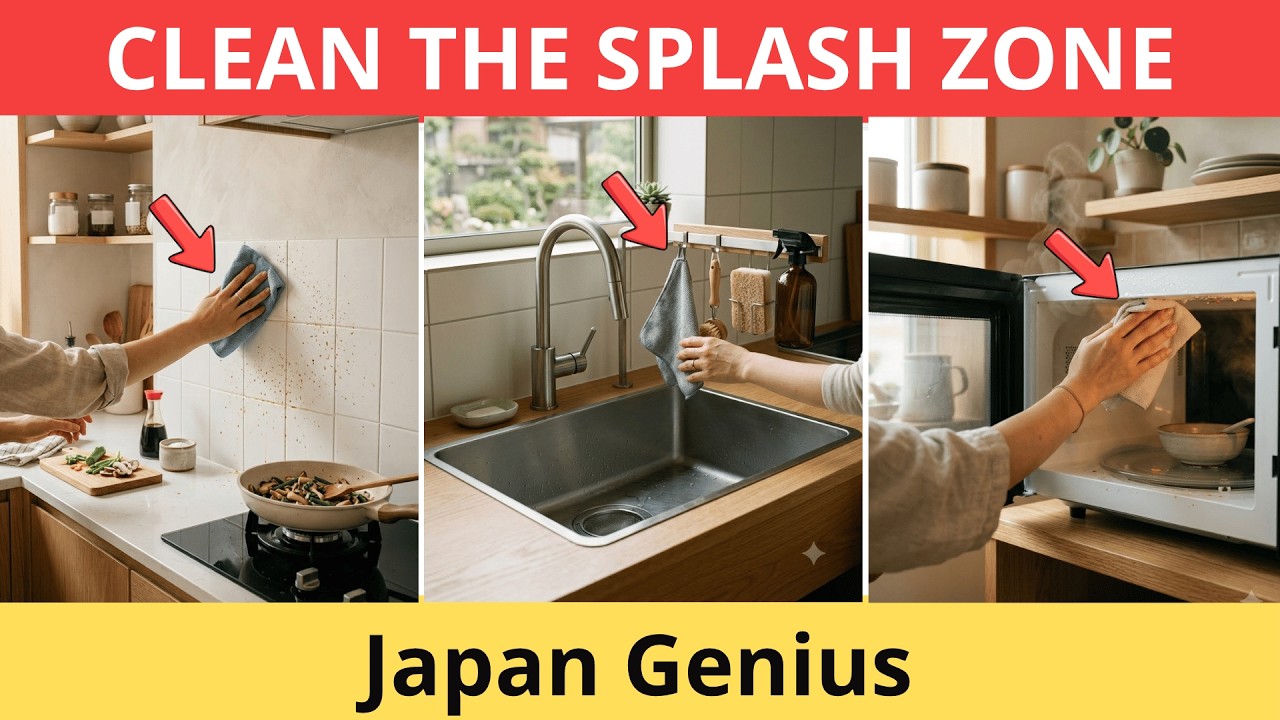
clean the splash zone
But here's the part most people miss. The stove isn't the only thing getting dirty. Every time you cook, tiny droplets of oil, sauce, and water can land on the backsplash, the wall, the countertop, and even the cabinet below. And because these spots are so small, they're easy to ignore until they aren't. So instead of wiping only the stove top, make a quick scan of the entire splash zone. Stove, backsplash, counter, cabinet front. If you can see a fresh splash, remove it immediately. The goal isn't to clean the entire kitchen every time you cook. It's simply to catch the dirt before it spreads and sticks.
small wipe keeps the next cleaning job small, too
Don't wait for grime to become visible everywhere. Catch it where it lands.

use steam before it disappears
Now, let's move from grease to something even easier to overlook, the microwave. After heating food, don't immediately close the door and walk away. There may still be warm steam inside. That moisture can help soften small food splashes and dried residue before they have time to harden. So, while the microwave is still warm, open the door and give the interior a quick wipe. No special cleaning session, no aggressive scrubbing. Just use the condition that's already there. This is the same principle behind the entire system. Don't create a cleaning task when you can attach it to something you're already doing. The microwave has just finished cooking. The steam is already there. So, use those few seconds to reset it because once the residue dries, the easy wipe becomes a real cleaning job.
empty the drain catcher
Now, let's move to the sink.

of the easiest things to overlook is the small drain catcher sitting at the bottom
It catches food scraps, but if you leave those scraps sitting there, the sink can quickly become a place where yesterday's meal starts to linger. So, make this a simple trigger. The last dish is done. Empty the catcher. Lift it, remove the food residue, rinse it, and put it back. It takes only a few seconds, but it prevents a small amount of food waste from becoming tomorrow's smell, mess, or extra cleaning. The important part isn't how thoroughly you scrub the sink. It's removing the source of the problem before it has time to build up. That is the whole idea behind these micro habits. Catch the mess early while it's still easy.
rinse starch before it dries
Here's another tiny habit that can save you from unnecessary scrubbing. Think about what happens after cooking rice, noodles, porridge, or other starchy foods. A little residue stays on the pot. At

it rinses away easily, but leave it sitting there until it dries, and that soft ...
So, don't wait. As soon as you're finished with the pot, give it a quick rinse before the residue has a chance to harden. You're not doing the full cleanup yet. You're simply making the next step easier. And that's an important distinction. Good kitchen maintenance isn't always about cleaning more. Sometimes it's about making sure the next cleaning step requires almost no effort. Rinse early, scrub less later.
leave the sink dry
Now the dishes are done, but don't walk away just yet. There's

final step
Leave the sink dry. Rinse away the remaining residue. Then take a dedicated cloth and make a quick pass around the basin, the bottom, the corners, around the drain, in the area beside the faucet. You're not polishing the sink like it's a showroom. You're simply removing the water that's left behind. Because a kitchen can look clean and still feel unfinished when every surface is wet. A dry sink creates a visual reset. And tomorrow when you walk into the kitchen, you're starting with a clean slate instead of yesterday's leftovers. Rinse, wipe, dry, reset.
tiny actions and the sink is ready for another day

Reset the landing zone. Now, let's move from cleaning to workflow.
of the fastest ways for a kitchen to become messy is simple
You keep adding things without clearing anything away. You take out the vegetables, then the sauce, then the cutting board, then another ingredient, and suddenly there's nowhere left to work. So, try a simple rule. Clear before you add. Before bringing out the next ingredient, put away the packaging, return the previous tool, and clear a small section of the counter. This creates a clean landing zone for whatever comes next. You're not stopping to clean the entire kitchen. You're simply preventing clutter from compounding.

ingredient comes out,
thing goes back, then you continue
The result is surprisingly different. Instead of cleaning a chaotic kitchen after cooking, you're maintaining a workspace that stays usable while you cook. Don't let clutter accumulate between actions. Reset the space before the next action begins.

keep cleaning tools within reach
Here's a small change that can completely change your behavior. Put the cleaning tool where the mess happens. If the cloth is hidden in a cabinet across the kitchen, you'll probably think, "I'll clean it later." But if the cloth is right beside the sink or the brush is already near the drain, the decision becomes almost effortless. See the mess, reach for the tool, fix it. move on. This is what makes a cleaning system work. You don't need more motivation. You need less friction. And this is where Japanese style organization becomes especially interesting. The goal isn't simply to have fewer things. It's to make the things you actually use easy to access and easy to put back. Because when the correct tool is always within reach, a 5-
cleanup doesn't feel like a chore
Make the right action the easiest action. None. Clean during waiting time. Now, here's

of the easiest habits to add to your routine
Use waiting time. Water is coming to a boil. The rice cooker is finishing. Your food needs another minute on the stove. Normally, those seconds disappear. But instead of creating a separate cleaning session, use that built-in pause. Wipe a cabinet handle. Clean an appliance button. Clear
corner of the counter
Rinse the sink. That's it. You don't need 10 minutes. You don't even need 1 minute. You're simply attaching a tiny cleaning action to time that was already available. And this is the real power of Sudoggi. You don't find extra time to clean. You use the time that's already there. Once this becomes automatic, the kitchen gets small resets throughout the day instead of

giant cleaning job at the end
Don't wait for time to clean. Use the time you're already waiting. 10. Dry and hang kitchen cloths. Now, let's talk about something small that can quietly create a big problem. The kitchen cloth. After wiping the counter or sink, don't leave the cloth crumpled up while it's still wet. Rinse it. Ring it out. Then, hang it somewhere with good airflow so it can dry properly. Because a damp cloth trapped in a warm kitchen can quickly start to smell unpleasant. The goal isn't complicated. You simply want the cloth to dry between uses instead of staying wet for hours. And there's another advantage. When the cloth has a designated place to dry, you always know where it belongs. No cloth abandoned on the counter. No wet towel thrown over the sink. Just use it, rinse it, hang it. A tiny reset that keeps both the cloth and the kitchen feeling fresher. 11. Give every mess an immediate exit. Here's a habit that goes beyond cleaning. Every type of mess needs somewhere to go. Food scraps have a place. Packaging has a place. Used tools have a place. Dirty cloths have a place. When something doesn't have an obvious destination, it stays on the counter. And that's how small messes begin to multiply. So create a simple flow. Food waste goes to the waste container. Packaging leaves the workspace. Used tools return to their home. Cleaning cloths go to their drying spot. The important part is that you don't create a
decision later
You finish

action and the mess immediately moves toward its final destination
This is what makes an organized kitchen feel effortless. Nothing is waiting for you to deal with it later. Every action has an ending. And when every mess has an immediate exit, clutter has much less chance to accumulate. 12. The 10-
final walk through
And finally, before you leave the kitchen, take 10 seconds. Not 10 minutes, just 10 seconds. Look around. Stove, any fresh splashes. Counter, anything that doesn't belong. Sink, food residue or standing water. drain. Anything left behind. Cloth. Is it rinsed and hanging. If something is wrong, fix it immediately. If everything looks good, you're done. This isn't a deep cleaning session. It's simply a final reset. And that small reset changes how the next day begins. Instead of walking into yesterday's mess, you walk into a kitchen that's already ready for you. That's the difference between cleaning after problems appear and designing a routine that prevents those problems from growing in the

place
See it, fix it, reset it, then leave the kitchen ready for tomorrow. After all 12 habits, there's a pattern. None of them is difficult. Wipe the splash. Clear the drain. Rinse the pot. Dry the sink. Reset the counter. Use waiting time. Hang the cloth. Check the kitchen before you leave. Each action takes only a few seconds, but together they create something much bigger. A system that prevents small problems from becoming big ones. That's the real lesson. A clean kitchen doesn't necessarily come from spending more time cleaning. It comes from reducing the amount of cleaning that becomes necessary in the
place
Instead of waiting for grease to harden, you wipe it while it's fresh. Instead of letting food residue sit, you remove it immediately. Instead of creating a huge cleaning session, you attach small resets to actions you're already doing. And that's why these habits feel almost effortless. They're not extra work. They're built into the workflow. Prevent, catch, reset, repeat. Over time, the kitchen stays closer to its clean state without requiring a massive weekend cleanup. The goal isn't a perfectly spotless kitchen every

The goal is a kitchen that is easy to reset. And once you understand that principle, you can apply it far beyond the kitchen. So the next time you cook, don't try to clean the entire kitchen. Just start with
tiny habit
Wipe

splash
Clear
surface
Dry the sink. Use the few seconds you already have because the smartest cleaning system isn't the

that makes you work harder
It's the
that makes cleaning almost unnecessary
If you enjoyed discovering simple Japanese systems that make everyday life easier, subscribe for more. And remember, don't clean harder, stop the mess earlier.

Summary: The Conventional Habit vs. The Japanese System
| Bathroom Routine | Conventional Habit | 🇯🇵 Japanese System |
|---|---|---|
| Shampoo & Soap Storage | Sitting on shower ledge | Elevated hanging draining racks |
| Bath Towel Material | Thick fluffy plush towels | Lightweight quick-drying Tenugui weaves |
| Toothbrush Drying | Stagnant cup on sink counter | Wall-mounted vertical individual clips |
| Personal Hygiene | Disposable flushable wipes | Warm water Bidet / Washlet spray |
| Cleaning System | Deep clean with 10 chemical bottles | 1-minute daily preventative micro-wipe |
Which Item Will You Remove First?
Creating a cleaner bathroom isn't about buying more products. It's about designing a space that stops dirt and moisture before they start!