
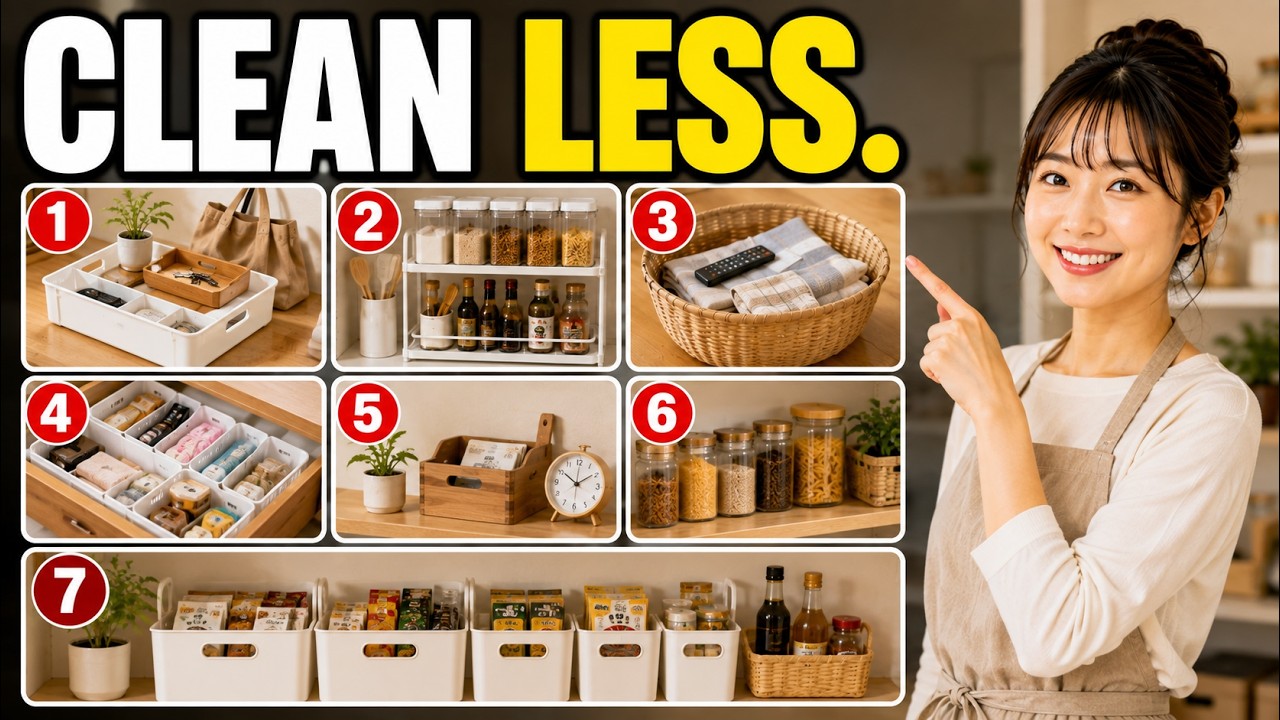
7 Japanese Home Organization Habits That Actually Make Life Easier
Key Takeaways & Summary
Sustainable habits aren't about buying more products or magic gadgets. Instead, they focus on simple systems that prevent clutter, maintain order, and make everyday life easier!
Keeping your home tidy sounds simple until you have kids, a pet, and a job that takes up almost your entire day. You clean the house in the morning, but by evening it looks like you never cleaned at all. And that's where most people make the same mistake. They think the solution is to clean more. But what if the real problem isn't that you don't clean enough? What if your home is simply creating too much work? This is where Japanese home organization gets interesting. Staying organized isn't necessarily about cleaning all day. It's about creating simple systems that make staying tidy almost effortless. Don't rely on motivation. Build a system. Everything has a designated home. Things are stored where you actually use them, and small messes are dealt with before they have a chance to become big ones. Because a tidy home doesn't have to mean spending your entire evening cleaning. It can simply mean designing your home so that staying organized takes less time, less effort, and fewer decisions. Today, we're looking at seven simple Japanese habits and home systems that can help you keep your home under control even when life itself is anything but simple. One, give everything a home. The first system is simple. Everything has a home. Think about what usually happens when you come home after a long day. You put your keys down. Your bag goes on a chair. Something else lands on the table. You tell yourself you'll put everything away later and later never comes. The problem isn't necessarily that you have too many things. It's that too many things don't have a clear destination. Japanese style organization solves this by making that destination obvious. Instead of deciding where something should go every time you use it, you decide once. Your keys always go in the same place. Your bag has its own spot. The things you use everyday have a place that's easy to reach and easy to remember. That sounds almost too simple, but it removes one of the biggest causes of everyday clutter, decision-m. When you know exactly where something belongs, putting it away doesn't feel like a chore. You simply return it home. And when everyone in the household follows the same system, the home becomes much easier to maintain. You don't need to constantly remind yourself to tidy up. The environment itself tells you what to do. A place for everything means fewer things left everywhere. Two, store things where you actually use them. But giving something a home isn't enough. That home has to make sense. Imagine you're cooking and the tool you need is stored somewhere across the kitchen. Technically, it's organized, but every time you use it, you're making the same unnecessary trip. Eventually, you get tired of putting it back, and that's when organized storage starts turning into clutter. A smarter approach is to place things according to how you use them. If you reach for something every morning, it should be easy to reach every morning. If you use something beside the sink, its storage shouldn't be halfway across the room. The idea is simple. Make the correct action the easiest action. Because when putting something away takes almost no effort, you're far more likely to do it immediately. This is why good organization isn't really about finding clever places to hide things. It's about understanding your daily movements. Watch what you naturally do around your home. Where do you stop? Where do you reach? Where do things accumulate? Those places are telling you where your storage should be. Instead of forcing your routine to fit the storage, make the storage fit your routine. Three, reset while you move. There's another reason some homes stay tidy without constant cleaning. People don't always wait until something becomes a mess before dealing with it. They reset things as they go. You're already walking to the kitchen, so you take the cup with you. You're finished using something, so you put it back before moving on. It sounds insignificant, but that's exactly the point. A home rarely becomes chaotic because of one huge mistake. It happens through dozens of tiny moments that are ignored. One thing is left on the table, another stays on the sofa, something else is left on the floor. None of them seems important enough to deal with right now until suddenly everything needs to be dealt with at once. The alternative is to quietly reset the space as you move through it. You're not stopping your life to clean. You're simply preventing small problems from accumulating. And that changes the feeling of cleaning completely. Instead of spending an hour recovering from a messy day, you're spending a few seconds here and there keeping the mess from growing. The easiest mess to clean is the mess you never allow to become big. Four, the five minute night reset. Of course, even a good system can't stop life from happening. Some days are messy, some days you're exhausted, and sometimes, no matter how organized your home is, things simply pile up. That's why the final reset of the day doesn't need to be complicated. Before going to bed, spend five minutes returning the most visible parts of your home to their normal state. Not a deep clean, not a perfect reset, just enough to make tomorrow easier. Clear the space where you'll eat breakfast. Put away the things that don't belong in the living room. Return the obvious clutter to its home. Then stop. The point isn't to finish every cleaning task before you sleep. It's to make sure tomorrow doesn't begin with yesterday's mess. Because there's a big difference between waking up and thinking I need to clean and waking up and thinking I'm ready to start the day. That small 5-minute reset creates a clean starting point for tomorrow. And when combined with the systems we've already seen, cleaning becomes less of an event. It becomes something that happens naturally throughout the day. You don't clean more. You simply give mess less time to grow. Five, the temporary basket. But there's another problem that every organized home eventually runs into. Not everything has an obvious place. Maybe you find something that belongs in another room. Maybe you're not sure whether to keep it. Maybe you need to repair it, donate it, or simply deal with it later. And when you don't know what to do with something, the easiest option is usually to leave it wherever you found it. That's where a simple temporary basket can help. Think of it as a waiting room for things that don't have an immediate destination. Instead of letting them spread across tables, chairs, and countertops, they have one contained place to wait. But there's an important rule. The basket is not a permanent home. If it becomes another place where things disappear forever, you've simply created a new form of clutter. The point is to collect the decisions in one place so you can deal with them later. And when the basket starts getting full, that's your signal. It's time to process what's inside. Some things go back to their homes. Some get repaired. Some can be donated. And some may simply no longer deserve a place in your home. This creates something surprisingly useful, a buffer between everyday life and permanent clutter. You don't have to make every decision immediately, but you also don't allow unfinished decisions to take over the house. Six, moti, give things more value. This leads to another idea closely associated with Japanese culture. Motina at its heart is a simple feeling. Don't waste the value of something that still has a useful life. And this way of thinking can completely change how you manage a home. Instead of constantly asking, "What should I throw away?" You start asking, "Is there still value in this?" Maybe something can be repaired instead of replaced. Maybe an item can be reused for another purpose. Maybe something you no longer need could be useful to someone else. Even food can be viewed differently. A small amount of leftovers doesn't automatically have to become waste. The idea isn't to keep everything forever. That would create the exact opposite of a minimalist home. Motai is about recognizing value before something becomes waste. And that distinction matters because a home becomes cluttered not only when we buy too much but also when we keep things without deciding what purpose they serve. So before bringing something new into your home, ask a simple question. Do I really need this or can something I already own do the job? That one question can prevent a surprising amount of clutter before it ever enters the house. And sometimes the best way to organize your home is simply to bring less into it. Seven, make the right choice the easy choice. Now we reached the idea that connects everything we've seen so far. A good organization system shouldn't depend on willpower because willpower changes. Some days you're motivated. Some days you're exhausted. Some days you have time. And some days you barely have enough energy to make dinner. So instead of expecting yourself to always make the perfect decision, make the better decision easier. If something is used everyday, don't hide it somewhere difficult to reach. If something needs to be returned, make its storage obvious. If something creates regular waste, put the waste solution close to where it happens. If something is difficult to put away, ask whether the storage itself is the problem. This is the difference between organizing objects and designing behavior. You're not trying to become a more disciplined person. You're changing the environment so that the behavior you want requires less effort. And when the easiest option is also the organized option, you don't have to think about it nearly as much. That's when a home begins to feel different. It doesn't constantly demand your attention. It quietly supports the way you live. After all seven systems, there's a pattern. Japanese organization isn't really about cleaning more. And it isn't about having a perfectly minimalist home. It's about removing unnecessary friction from everyday life. Give things a home. Put them where you actually use them. Reset small problems before they grow. Create a simple system for the things that don't have an immediate place. Think twice before bringing more into your home. And most importantly, design your environment so that staying organized doesn't require constant motivation. Because the goal isn't to create a home that looks perfect for 5 minutes. The goal is to create a home that is easy to return to order. That's a much more realistic definition of an organized home, especially when you have children, a demanding job, a pet, or simply a life that's already busy enough. You don't need to spend more time fighting your home. You can design the home to work with you. And sometimes the smartest organization system isn't the one that helps you clean faster. It's the one that gives you less to clean in the first place. So, which of these systems would make the biggest difference in your home? The idea of giving everything a home, storing things where you actually use them, or the simple 5minute reset at the end of the day? Let me know in the comments. And if you enjoyed discovering how simple Japanese systems can make everyday life easier, subscribe for more practical ideas from Japan. Because sometimes the smartest solutions aren't the biggest ones.
Summary: The Conventional Habit vs. The Japanese System
| Bathroom Routine | Conventional Habit | 🇯🇵 Japanese System |
|---|---|---|
| Shampoo & Soap Storage | Sitting on shower ledge | Elevated hanging draining racks |
| Bath Towel Material | Thick fluffy plush towels | Lightweight quick-drying Tenugui weaves |
| Toothbrush Drying | Stagnant cup on sink counter | Wall-mounted vertical individual clips |
| Personal Hygiene | Disposable flushable wipes | Warm water Bidet / Washlet spray |
| Cleaning System | Deep clean with 10 chemical bottles | 1-minute daily preventative micro-wipe |
Which Item Will You Remove First?
Creating a cleaner bathroom isn't about buying more products. It's about designing a space that stops dirt and moisture before they start!