
Japan Genius: 7 Inventions That Remove Everyday Stress
Key Takeaways & Executive Summary
Sustainable systems aren't about buying more products or doing heavy cleaning every day. Instead, they focus on simple, friction-free daily habits that prevent clutter and keep order effortlessly!
There is something strange about Japan that makes people feel at peace. Not because the country is quiet, not because the streets are empty. Tokyo is
of the busiest cities on Earth
Millions of people moving. Trains arrive every few minutes. Tiny apartments, tiny sidewalks, tiny spaces everywhere. And yet somehow daily life feels smoother. Because Japan became obsessed with something most countries ignore. Not speed, not luxury, not showing off technology, but removes friction. Tiny frustrations, tiny moments of stress, tiny pieces of mental exhaustion people experience every single day. And once you notice it, you start seeing it everywhere. Like parking a car. In most cities, parking feels like combat. You circle the block endlessly. Every spot is too small. Someone behind you starts waiting. Now your heart rate rises because you have exactly

chance to reverse perfectly into a narrow space
A simple parking mistake can ruin your entire mood. And this problem becomes brutal in Japan because land is incredibly expensive. Cities grew vertically. Roads stayed narrow. And there simply is not enough room for giant parking lots like America. So Japan parking is near like an engineering problem. Instead of spreading cars horizontally, they stack them vertically. You drive into what looks like a tiny garage. The sensors scan the vehicle. You step outside, press a button, then the machine swallows the car. Platforms rotate. Elevators lift entire vehicles upward. Robotic rails slide them sideways into empty storage slots hidden inside the building. Some systems can store dozens of cars in the footprint of a convenience store. And the strange part is how calming it feels to watch. The movements are slow, precise, quiet. No chaos, no honking, no human error. The machine handles the stress for you. Japan understands something many countries still ignore. Mental exhaustion is often caused by hundreds of tiny decisions. Where do I park. Can I fit. Am I blocking traffic. Will I scratch something. Remove those micro stresses and daily life immediately feels lighter. That philosophy continues inside Japanese homes because when space becomes limited, waste becomes visible. In many countries, a bathroom contains separate systems for washing hands, storing water, and flushing toilets. Japan looked there and saw ineffectiveness. So, they merged them together. At
glance, the toilet seems ordinary
But the moment you flush, clean water flows from a faucet built directly above the tank. You wash your hands there

Then the used water drains into the tank below where it gets reused for the next flush cycle.
movement,

functions
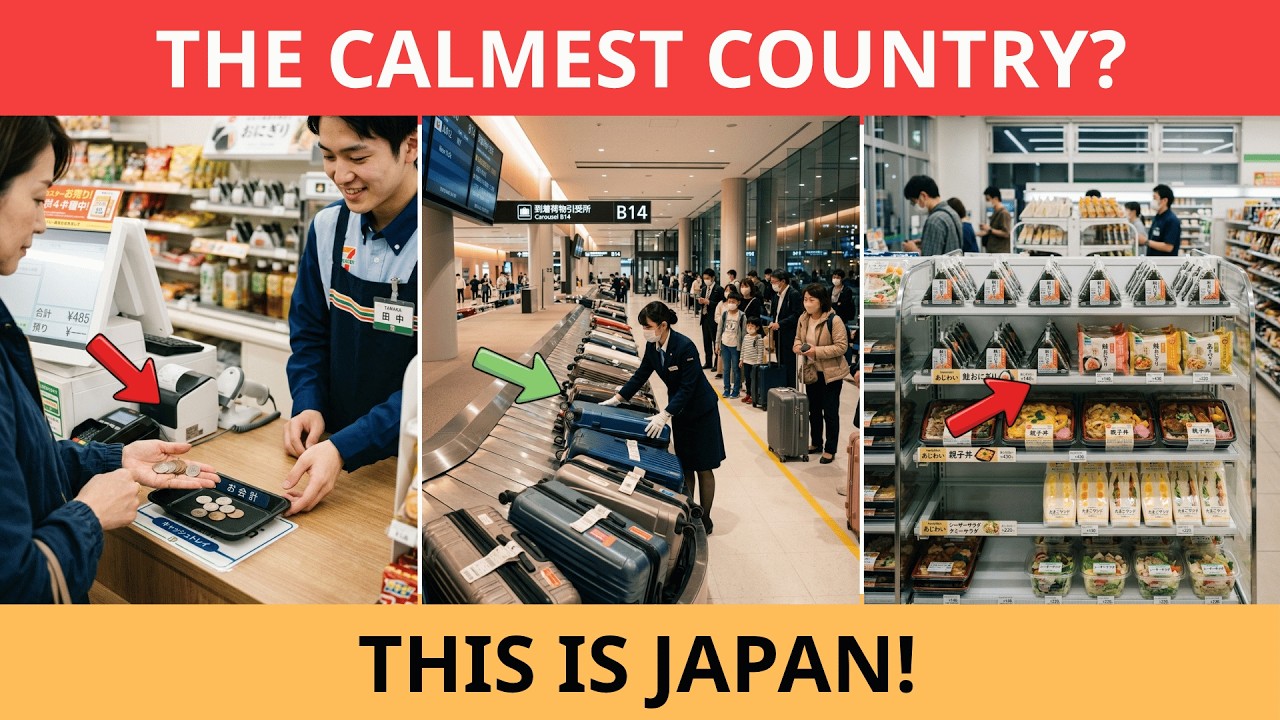
And what makes this invention brilliant is not complicated. It is integrated. Because Japanese design philosophy often focuses on eliminating unnecessary duplication. Why install another sink inside an apartment barely larger than a hotel room. Why waste perfectly usable water for a process that does not require drinking quality cleanliness. The result is a product that quietly saves water, saves space, and reduce clutter without asking the user to change their behavior at all. That is the key. The best Japanese inventions do not force discipline. They make efficiency feel automatic. And eventually, you stop noticing the invention itself. You only notice that life feels smoother. But some of Japan's smartest systems have nothing to do with machines. They solve social friction instead. Because crowded societies create invisible tension, especially at airports. After a long flight, most baggage claim areas feel mildly hostile. Everyone crowds forward. People anxiously scanned every suitcase. Someone grabbed the wrong bag. Handles face random directions. Wet luggage slides across dirty conveyor belts. The entire experience feels messy. But in Japan, even luggage retrieval gets redesigned around psychological comfort. Airport staff often arrange suitcases with the handles facing outward, not accidentally, intentionally, so passengers do not need to twist awkwardly or drag heavy luggage sideways through a crowd. On rainy days, workers may even wipe moisture off the suitcases before placing them onto the belt. And visually, the entire carousel looks organized. The bags move in clean, flowing lines. Nothing feels aggressive. It almost resembles a display shelf instead of airport chaos. And this reveals something fascinating about Japanese culture. Respect is often expressed through anticipation, not reacting after a problem happens, preventing discomfort before it appears. Nobody complains about outward-facing handles. Most people never even consciously notice them. But subconsciously the experience feels easier. And that emotional smoothness is what Japan keeps engineering again and again. Even the act of paying gets redesign because direct cash transactions contain subtle social pressure. Your hands collide awkwardly. Coins slip. The cashier rushes. Customers behind you stare impatiently. It creates tiny bursts of anxiety throughout the day. So, Japan normalized a simple object, a payment tray. At
it seems unnecessary until you realize how many problems it quietly removes
The tray creates a neutral space between customer and worker, no fumbling, no accidental touching, no confusion about change. Many trays even contain small rubber textures that stop coins from sliding around. Everything becomes slower, cleaner, more deliberate. And the sound itself matters. Coins landing softly on clean plastic. Bills folded carefully. No loud clattering. Japanese environments are often designed acoustically, too. Reducing noise reduces stress. That is why so many Japanese stores, restaurants, and stations feel strangely peaceful despite being crowded. And maybe the ultimate example of social friction removal is Japan's tipping culture, or more accurately, the lack of

In many countries, the meal is never truly finished because now you must calculate 10%, 15%, 20%, was the service good enough. Will the waiter judge me. Am I being disrespectful. A relaxing dinner suddenly ends with financial awkwardness. Japan removes this entire layer of tension. Service quality is not tied to emotional negotiation. Employees are expected to provide excellent service consistently because professionalism itself is considered part of the job, not a performance designed to unlock extra payment. And psychologically this changes everything. Customers relax more. Workers behave more naturally. interactions feel calmer because nobody is silently evaluating the other person financially. You are not buying kindness. You are entering a system where respect is already included. And once people experience that, many realize how exhausting constant tipping culture actually feels. This obsession with predictability also explains Japanese packaging. In many places, advertising is designed to manipulate emotion. Bigger, cheesier, more dramatic. Expectation becomes disconnected from reality. But Japanese packaging often aims for visual honesty instead. If the sandwich contains
slices of meat, the image usually shows

slices
If the dessert is small, the box rarely pretends otherwise because disappointment creates friction, too. And Japan treats trust like infrastructure. When consumers repeatedly receive exactly what they expected, their brain slowly stops preparing for deception. That reduces cognitive stress, which sounds minor until you realize how much modern advertising relies on exaggeration. And finally, there is the Japanese bath culture. Maybe the deepest expression of this philosophy because Japan understands something modern society forgets. Human beings are not machines. Efficiency alone cannot sustain mental health. People need recovery. That is why Sento and Onsen exist almost like public reset stations. Warm water slows the nervous system. Steam softens the atmosphere. Conversations become quieter. Phones disappear. Even the architecture matters. Wood textures, stone surfaces, dim reflections on still water. Everything is designed to lower mental stimulation. Japan does not only optimize movement. It optimizes emotional state. And maybe that is why the country feels futuristic. Not because of giant robots, not because of flashy technology, but because Japan became obsessed with removing friction from ordinary life, tiny frustrations, tiny discomforts, tiny moments of stress,
by

until daily life itself starts feeling lighter
And maybe that is the real meaning of genius. Not inventing things that impress people for
minutes, but designing a world that makes people slightly less tired every single day
This is Japan genius.

Summary: The Conventional Habit vs. The Japanese System
| Bathroom Routine | Conventional Habit | 🇯🇵 Japanese System |
|---|---|---|
| Shampoo & Soap Storage | Sitting on shower ledge | Elevated hanging draining racks |
| Bath Towel Material | Thick fluffy plush towels | Lightweight quick-drying Tenugui weaves |
| Toothbrush Drying | Stagnant cup on sink counter | Wall-mounted vertical individual clips |
| Personal Hygiene | Disposable flushable wipes | Warm water Bidet / Washlet spray |
| Cleaning System | Deep clean with 10 chemical bottles | 1-minute daily preventative micro-wipe |
Which Item Will You Remove First?
Creating a cleaner bathroom isn't about buying more products. It's about designing a space that stops dirt and moisture before they start!