
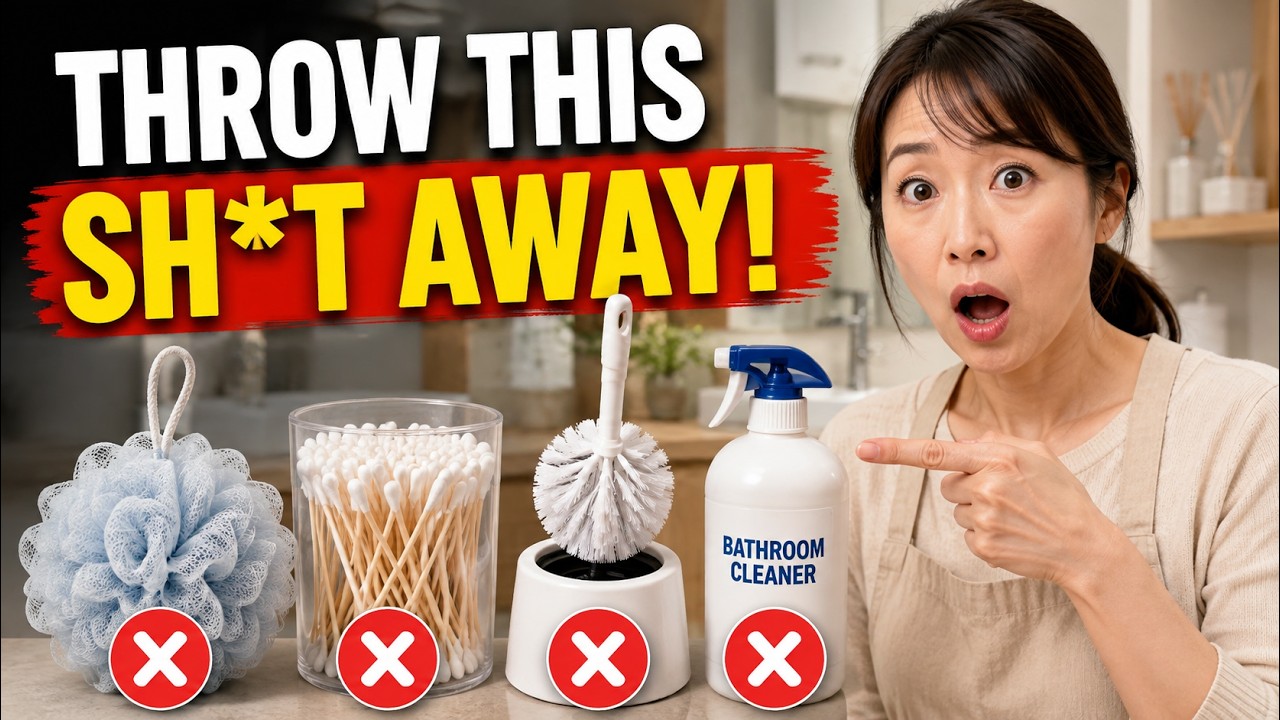
10 Bathroom Items Americans Need to THROW AWAY — The Japanese Way
Key Takeaways: The Japanese Bathroom Philosophy
Japanese bathroom design doesn't rely on more cleaning products or magic gadgets. Instead, it focuses on simple systems that prevent moisture, eliminate clutter, and keep surfaces dry before grime can ever build up.
Stop using these bathroom items the way you always have. You use them every single day without giving them a second thought. But some trap moisture. Some collect grime. And some may be much harder to keep hygienic than you realize. The surprising part? Japan has a very different approach. Instead of relying on more products, Japanese bathrooms are designed around simple systems that keep things dry, clean, and easy to maintain. So today, we're looking at 10 everyday bathroom items you may want to rethink and what Japan does differently. And
is probably sitting in your bathroom right now

those old shampoo and body wash bottles
Take a look around your shower. Chances are you have several bottles sitting there right now. Shampoo, conditioner, body wash, maybe a bottle you haven't touched in weeks. The problem isn't that shampoo is dangerous. It's what happens when your bathroom becomes a collection of half-used bottles. Water gets underneath them. Soap residue builds up around the caps, and those bottles can stay wet day after day. Japanese bathrooms often take a much simpler approach. Keep only what you actually use. Store bottles where water can drain away. And don't let your shower products become permanent fixtures. The goal isn't to own better bottles. It's to create a bathroom that's easier to keep clean. And that same idea applies to something you probably touch every day.
the giant fluffy bath towel
It feels great when you first wrap yourself in one, but there's a catch. The thicker the towel, the longer it can take to dry. And if a towel stays damp for hours, especially in a humid bathroom, that's not exactly the environment you want. This is one reason Japanese bath towels are often designed to be lighter, thinner, and faster to dry. You don't need a huge piece of fabric that stays wet all day. You need a towel that dries quickly, takes up less space, and can be washed frequently. It's a small change, but it completely changes the bathroom routine. And if your towel has a problem, wait until you see what happens with the thing you use to scrub your body.

the toothbrush sitting on your bathroom sink
Most people think the toothbrush is clean because they just used it to clean their teeth. But look at where you're storing it. It's sitting in a cup. It's surrounded by moisture. And sometimes it's sitting just inches away from the toilet. The problem isn't the toothbrush itself. It's the storage system. Japanese bathrooms often use simple vertical holders that keep toothbrushes separated and allow the head to dry properly. No pile of toothbrushes. No wet cup collecting water at the bottom. Just a small system that gives every toothbrush its own place. And that's a recurring Japanese principle. Don't just clean the object, design the space around it so it stays cleaner. Now, let's move to something much bigger that almost every bathroom has.
the way you store toilet paper
Toilet paper itself isn't the problem. The problem is where we sometimes keep it. On the floor, beside the toilet, under the sink, or stacked in an open corner where it can absorb moisture and collect dust. Japanese bathrooms tend to make storage much more deliberate. Keep spare rolls off the floor, away from unnecessary moisture, and easy to reach when you actually need them. It sounds almost too simple, but that's the point. Japanese organization isn't about finding a complicated gadget for everything. It's about removing small problems before become big ones. And the next item is one of the most convenient and most misunderstood products in a modern bathroom.

flushable wipes
These seem like the perfect bathroom shortcut. They're soft, they're convenient, and they're marketed as an easy way to feel cleaner. But there's something important to remember. Flushable doesn't mean you should flush unlimited amounts of wipes. And depending on the ingredients, scented or heavily treated wipes can also irritate sensitive skin. Japan has a very different solution to the same problem. Instead of relying on another disposable product, many Japanese bathrooms use bidet and washlet technology to clean with water. No package of wipes sitting beside the toilet, less disposable waste, and a much more integrated approach to personal hygiene. It's a perfect example of how Japan often solves a bathroom problem by changing the system, not by adding another product. And we're only halfway through. The next five are even more interesting.
cotton swabs
They're probably one of the most common things in your bathroom, and for many people, using one after a shower feels completely normal. But here's the problem. Your ear isn't something you need to deep clean every day. Pushing a cotton swab too far can actually push earwax deeper instead of removing it. And that's where the Japanese approach is interesting. It's less about constantly cleaning every little thing and more about knowing what actually needs to be cleaned and what should simply be left alone. A simple habit can sometimes be better than another product. And the next item is supposed to help you get cleaner, but if it never gets the chance to dry, it can become a very different story.

the synthetic bath loofah
You use it to get clean, you rinse it and then you hang it up and forget about it until your next shower. But think about what happens in between. It stays wet. And if there's nowhere for it to dry properly, moisture can remain trapped inside the material. That's why Japanese bathing routines often favor simple body washing towels that are thin, lightweight, and quick to dry. They're easy to rinse, easy to hang, and they don't hold nearly as much water as a thick sponge. Because something that touches your skin every day should be one of the easiest things in your bathroom to dry. But there's another bathroom tool that's even harder to keep clean.
the traditional toilet brush
Nobody likes thinking about this one. You use it to clean the dirtiest part of the bathroom. Then you rinse it, put it straight back into its holder, and leave it there. Still wet. Sometimes sitting in dirty water. And that's the part most people don't think about. The brush has done its job, but now you have another object that needs to be cleaned and dried. Japanese bathroom systems often focus on making cleaning tools easier to drain, store, and replace. Some households also use disposable cleaning sheets or other systems that reduce the need to keep a permanently wet brush beside the toilet. The smarter system isn't necessarily the one that cleans harder. It's the one that's easier to keep hygienic after cleaning. And now we're getting to one of the biggest people make with bathroom products.

the collection of strong bathroom cleaners
Look under your sink. There's probably a glass cleaner, a bathroom cleaner, a toilet cleaner, a mold remover, maybe even a few bottles you haven't used in months. More cleaning products can make you feel like you're keeping the bathroom cleaner. But more chemicals don't automatically mean better cleaning. Some products can irritate skin or airways if they're used incorrectly. And certain cleaners should never be mixed together. The Japanese approach is often much more systematic. Clean small areas regularly. Use the right product for the right job. Keep unnecessary bottles out of the bathroom. And most importantly, don't wait until dirt becomes a problem that requires a stronger chemical. Prevention is usually easier than deep cleaning. But there's still one item left. And this one might be sitting right beside your toilet right now.
disposable bathroom wipes and cleaning sheets
They're convenient. Grab one. Wipe the surface. Throw it away. Done. But convenience comes with a trade-off. You create another stream of disposable waste every time you clean. And depending on the product, some wipes aren't suitable for flushing even when they're marketed for bathroom use. Japanese homes often approach bathroom maintenance differently. Instead of waiting for the bathroom to become heavily dirty, cleaning is built into the routine. Small areas are wiped regularly. Tools are kept accessible. And the bathroom is designed so that water, dirt, and clutter are easier to control in the first place. That's the bigger lesson behind all 10 items. Japan isn't necessarily using some magical product that makes a bathroom cleaner. It's building a system where the bathroom is easier to keep clean every day. Less moisture. Less clutter. Less unnecessary waste. And fewer things that become difficult to clean. Because the best bathroom cleaning system isn't the one that works hardest. It's the one that gives dirt the fewest chances to build up. After looking at all 10 items, there's a bigger lesson here. A cleaner bathroom isn't necessarily about buying more cleaning products. It's about creating a system that makes things easier to keep clean. Keep things dry. Keep them off the floor. Replace what becomes difficult to clean. And don't keep products you don't really need. That's one of the things Japanese design does so well. It doesn't just ask, "How do we clean this." It asks, "How do we stop this from becoming a problem in the first place." And once you start looking at your bathroom that way, you may realize that some of the things you've always considered essential were never really necessary at all. So, take a look around your bathroom today. Which one of these 10 would you get rid of first.
Summary: The Conventional Habit vs. The Japanese System
| Bathroom Routine | Conventional Habit | 🇯🇵 Japanese System |
|---|---|---|
| Shampoo & Soap Storage | Sitting on shower ledge | Elevated hanging draining racks |
| Bath Towel Material | Thick fluffy plush towels | Lightweight quick-drying Tenugui weaves |
| Toothbrush Drying | Stagnant cup on sink counter | Wall-mounted vertical individual clips |
| Personal Hygiene | Disposable flushable wipes | Warm water Bidet / Washlet spray |
| Cleaning System | Deep clean with 10 chemical bottles | 1-minute daily preventative micro-wipe |
Which Item Will You Remove First?
Creating a cleaner bathroom isn't about buying more products. It's about designing a space that stops dirt and moisture before they start!