
 ▶ Video
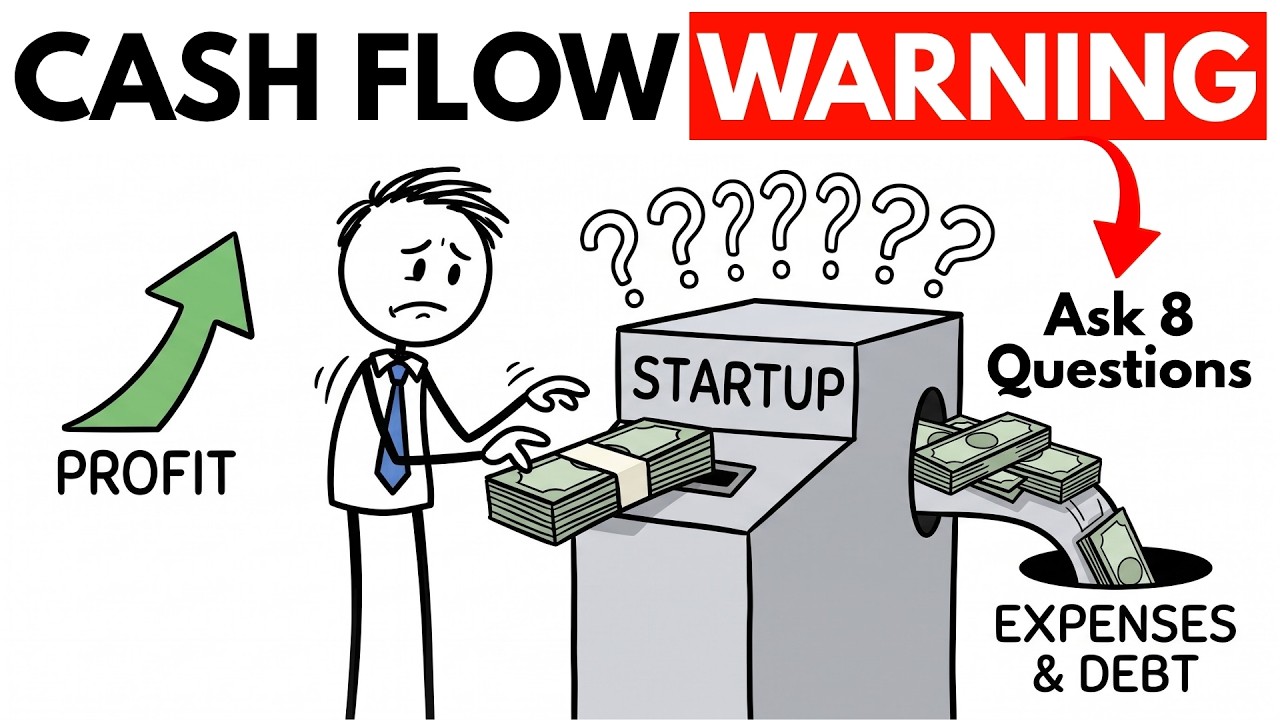
Starting a business can look exciting from the outside, but a good idea alone does not create a financially strong company. Before investing your money, time, or savings, you need to test whether the business actually makes financial sense. In this video, we will cover eight important questions every entrepreneur should ask before starting a business. Number one, is there a real problem people will pay to solve? Imagine you want to start a bookkeeping service for small businesses. Before creating a website, buying software, or hiring employees, talk with business owners and discover whether bookkeeping is actually a painful problem for them. A problem becomes commercially valuable when customers are willing to spend money to solve it. People may complain about something regularly, but that does not automatically mean they will pay for a solution. Test willingness to pay before making a major investment. Offer your service to a small group of potential customers, create a basic version of your product, or collect pre-orders before building everything. For example, if 20 potential customers like your idea, but nobody agrees to pay, demand may be weaker than expected. If several customers immediately ask about pricing, that provides stronger evidence of commercial demand. Your first question should therefore focus on the customer, not your product. Identify the problem, understand its financial impact, and determine whether enough customers consider solving that problem valuable enough to spend money. Number two, who exactly is my target customer? Imagine opening a marketing agency and saying your customers are all businesses. A local restaurant, global manufacturer, online store, dentist, and software company have completely different budgets, problems, buying processes, and expectations. Define your ideal customer clearly. Consider their industry, business size, location, purchasing power, specific problems, priorities, and reasons for buying. A narrow customer definition usually makes your marketing more focused and financially efficient. For example, instead of targeting every restaurant, you might serve independent restaurants struggling with food costs and profitability. Your service, pricing, advertising, and sales message can then address one clearly defined financial problem. Knowing your customer also helps estimate market size. Determine approximately how many potential customers exist, how frequently they might purchase, and how much they could realistically spend on your product or service. A business becomes easier to evaluate when you know exactly who pays you. Before investing heavily, identify the customer, understand their behavior, and verify that enough qualified buyers exist to support your financial goals. Number three, how much money will I need before the business becomes stable? Imagine starting a small coffee shop. You calculate equipment, furniture, licenses, inventory, and rent deposits at $40,000. You invest exactly $40,000 and assume the financial planning is finished. But after opening, sales grow slowly. You still need money for payroll, utilities, ingredients, marketing, insurance, maintenance, and rent. Suddenly, the real funding requirement is much larger than the initial startup cost. Separate startup expenses from operating cash requirements. Estimate how much money you need to launch, then calculate how much additional cash could be required while revenue gradually grows toward a sustainable level. Create conservative scenarios. If you expect the business to become stable within 6 months, calculate what happens if it takes 9 months or 12 months. This reveals whether your available capital provides enough financial protection. Many promising businesses struggle because they underestimate the journey between opening and financial stability. Calculate startup costs, monthly expenses, expected cash inflows, emergency requirements, and a reasonable cash buffer before committing your money. Number four. How will this business actually make a profit? Imagine selling a product for $50. At first, the price looks attractive because manufacturing costs only $20. You might assume the remaining $30 represents your profit from each sale. However, shipping, packaging, payment processing, advertising, returns, customer support, software, salaries, rent, and taxes can consume much of that difference. Revenue and gross margin alone do not tell you whether the business works financially. Build a simple profit model before launching. Estimate your selling price, variable cost per sale, gross profit, fixed operating expenses, expected sales volume, and approximate operating profit under realistic business conditions. For example, if you earn $20 of contribution from each sale and monthly fixed costs are $10,000, you need 500 sales just to cover those fixed expenses before generating additional profit. Understand exactly how revenue becomes profit. Know what you sell, what each sale costs, how many sales you need, and what expenses must be covered. A business model should work mathematically before you depend on it financially. Number five, why would customers choose my business over competitors? Imagine opening an online clothing store where hundreds of other sellers already offer similar products at similar prices. Simply entering the market does not give customers a strong financial or practical reason to choose you. Study your competitors before launching. Compare their pricing, products, customer experience, delivery speed, reputation, guarantees, marketing, and weaknesses. Your goal is to understand where your business can create meaningful additional value. For example, instead of competing only through lower prices, you might offer faster delivery, better customization, specialized expertise, easier ordering, superior customer support, or a product designed for an underserved customer group. Your advantage should also make financial sense. Offering free delivery may attract customers, but if shipping destroys your margin, the advantage becomes expensive. Every competitive strategy should eventually support sustainable profitability. Ask yourself what customers will receive from your business that they cannot easily receive elsewhere. A clear competitive advantage can reduce price pressure, strengthen customer loyalty, and make your business financially more defensible. Number six, can the business survive cash flow problems? Imagine running a construction company that completes a $30,000 project this month. The project is profitable, but the customer will not pay for 60 days. Meanwhile, employees and suppliers need payment immediately. This is why profit does not guarantee financial survival. Your business can show accounting profit while experiencing a serious cash shortage because the timing of cash coming in and cash going out is different. Create a basic cash flow forecast before starting. Estimate when customers will actually pay you and when payroll, suppliers, rent, taxes, debt payments, inventory, and other obligations will require cash. For example, if monthly expenses are $15,000, but customers regularly pay after 60 days, you may need significant working capital even when your sales and profit projections look financially attractive. Determine how much cash buffer the business needs during slow periods, delayed payments, unexpected expenses, or seasonal declines. Financially prepared businesses plan for cash shortages before they happen instead of searching for emergency funding afterward. Number seven, what could financially go wrong? Imagine starting a business where one large customer generates 60% of total revenue. Everything looks excellent until that customer suddenly changes suppliers. Your business could lose most of its cash inflow immediately. Identify major risks before investing. Consider customer concentration, supplier dependency, economic downturns, price increases, employee turnover, regulations, technology changes, competition, debt obligations, currency movements, and unexpected operating expenses. Then estimate the financial impact of realistic negative scenarios. What happens if revenue falls 20%? What if costs increase 15%? What if your biggest customer leaves or your primary supplier increases prices? You do not need to predict every possible problem. Instead, identify risks that could seriously damage the business and create practical responses such as cash reserves, alternative suppliers, insurance, flexible expenses, or diversified customers. Strong entrepreneurs do not assume everything will go according to plan. They understand where the business is financially vulnerable and decide beforehand how they will respond when sales, costs, customers, or market conditions change. Number eight, is this business worth my time, money, and risk? Imagine investing $50,000 and working 60 hours every week to build a business that eventually produces only a small annual income. The business may be profitable, but the return may not justify your investment. Evaluate the opportunity beyond revenue. Consider your capital investment, expected profit, cash flow, workload, financial risk, growth potential, required expertise, opportunity cost, and how long your money may remain tied up. For example, compare investing $50,000 into the business with alternative uses of that money and time. The comparison helps you understand whether the expected financial return adequately compensates you for the additional risk. Also, consider the long-term potential. Can the company increase revenue without expenses growing equally fast? Can employees eventually handle important operations? Could the business build valuable assets, recurring revenue, or transferable business value? Before starting, ask whether the potential reward justifies the resources you are committing.