
 ▶ Video
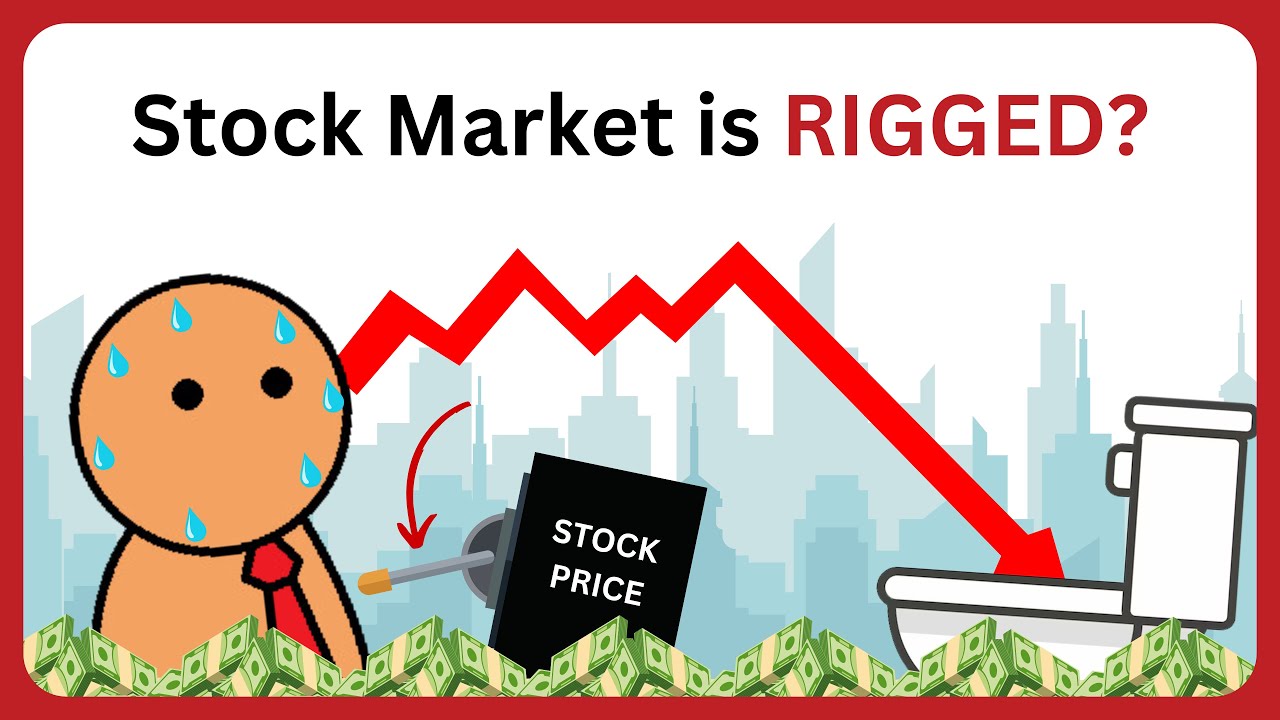
Hey there! You think you’re investing just like everyone else, buying some stocks, maybe a little crypto, hoping it grows over time. But what if I told you that somewhere out there, someone already knows your next move before you even click “buy”? And sometimes, they’re not just beating you to it, they’re taking you for everything you’ve got. Picture this: a flashy financial bro promises easy money, throwing cash around like the market will never crash. But when the truth comes out, FBI agents storm his office and furious victims are out on the streets protesting. You’ve probably seen stories like this before and wondered what really happened. In this video, we’re breaking down the stock market’s most famous scams, how they worked, how Wall Street turned loans into gambling, why it still happens, and most importantly, how you can spot them before they spot you. Well, let’s get started. Section 1. How These Scams Usually Work. Here’s the thing about market scams: they’re almost never random. They usually follow the same pattern, even if the details look different. In the stock market, an “insider” means someone who has special information or access to a company’s or stock’s internal data. They’re often the masterminds behind these kinds of scams. So, it always starts with hype. The insider needs a story that makes people believe this is their big chance, something too good to miss, or a “guaranteed” shortcut to wealth. That excitement is your bait. Once you’re hooked, the next move is control. Sometimes they control the actual supply, making it seem like there’s less available so you’ll rush to buy. Other times, they control the information, making sure you only hear the good news so you’ll keep buying even more. When more people are buying, they’re competing for it. That competition pushes the price higher and higher until it reaches a ridiculous level. And that’s exactly when the insiders make their move: selling their positions while the rest of the market is still buying. When people finally realize what happened, the competition flips. Now everyone is trying to sell, and the ones who got in last are left holding the losses. So, is that illegal? Sometimes. But other times, it’s done through loopholes in the law that make it perfectly legal on paper, even if it’s just as damaging. So, that’s why the legendary investor, Warren Buffet always says: “Never invest in a business you cannot understand.” Section 2. Pump and Dump: From Penny Stocks to Meme Coins. Oh, pump and dump, the most classic and simplest form of stock market fraud. Take Jordan Belfort, the real-life “Wolf of Wall Street” and one of the biggest fraudsters in Wall Street history. In the 1990s, he made millions running a scam called a pump and dump. Here’s how it worked. First, his team used “rat holes,” people working in secret, to buy up shares of tiny, little-known companies. Why in secret? Because if everyone saw him buying huge amounts, the price would shoot up too soon and it would be obvious that something was wrong. Once they had enough shares, his brokers would start calling everyday investors, hyping the stock as if it was about to explode in value. As more people believed the story and rushed to buy, they competed for the limited shares available, which sent the price skyrocketing. That’s when the insiders made their move. They sold everything they had at those inflated prices. But once the selling started, the price dropped fast. The last group to buy, the latecomers, lost the most because they paid the highest price right before the crash. And here’s the thing. This wasn’t just a 90s penny stock scam. Today it’s Discord or Telegram groups hyping random stocks claimed to be the next Tesla, viral coins that take off overnight, and other schemes. Different names, same pump-and-dump playbook. Section 3. Insider Advantage: Trading on Secrets. In the 1980s, one of the biggest scandals in Wall Street history involved Ivan Boesky and Martin Siegel. Boesky was an investor who made huge profits by buying stocks right before companies announced a merger or acquisition. Why a merger or acquisition? Let’s take Nestlé’s acquisition of Carnation as an example. When a big company like Nestlé wants to buy Carnation wholly, they need to buy 100% of its shares, including the ones held by regular investors. To convince shareholders to sell, Nestlé usually offers a higher price than what the stock is currently trading at. That premium offer makes Carnation’s stock price jump as soon as the deal is announced. At that time, Martin Siegel, who was at Kidder Peabody, was an investment banker involved in financing many of these mergers. He often knew about acquisitions before the public did. So, Boesky paid Siegel so-called “consulting fees,” which were really just bribes to leak inside information. With those tips, Boesky bought Carnation’s stock in the $60 to $70 range. After the news went public and Nestlé’s offer pushed the price above $80, he walked away with a $28 million profit. This is called insider trading. This is why insider trading is illegal. If you know something that will make a stock’s price jump before anyone else, you can buy a large amount while it’s still cheap, then sell high and take the profit while everyone else is left paying more. It’s basically like getting the test answers a week early. You’ve already memorized everything, while everyone else is still struggling and failing. That’s why many Americans suspect that lawmakers might have knowledge of upcoming legislation or policy changes that could affect a company’s stock price. For example, if Congress is privately discussing a new law to give billions in subsidies to clean energy companies, a politician could buy shares in solar panel or electric vehicle manufacturers before the law is made public. Once the law is announced and regular investors rush to buy, the price could jump, giving them an early profit. Because of situations like this, politicians, along with executives and major shareholders, must publicly report their trades. Watching these filings can give you clues about what insiders think will happen next. In fact, there is even a new investing trend nicknamed the “Pelosi Tracker,” which follows the disclosed trades of Nancy Pelosi, the former Speaker of the U.S. House of Representatives. The idea is that by copying the investments of prominent lawmakers, you might benefit from the same market moves they make. However, this data is usually released days or even weeks after the trade is made, so some people say you could already be too late to catch the biggest gains. And disclaimer! I’m only explaining how this works. I’m not sponsored by, or recommending, any kind of tracker or investment. Always do your own research and understand the risks before making financial decisions. Section 4. The Systemic Scam: When It’s the Whole Market. Sometimes, the scam is not just one person or one company, but the whole market is playing the same risky game. That is what happened in the 2000s. Before the 2008 crisis in the United States, commercial banks like Countrywide were handing out mortgages to almost anyone, even people with unstable income. Normally, a bank would keep that loan for 30 years and make a profit from interest. But they did not want to wait decades, and they did not want the risk if the borrower defaulted. So instead, banks sold the loan to Wall Street firms like Lehman Brothers. For example: let’s say John borrows $100,000. Countrywide charges him a bunch of fees like application fees, origination fees, closing costs. Those fees are their profit. Then, they sell John’s mortgage to Lehman for 100,000 dollars. The result is Countrywide gets its money back immediately. John still repays the loan to Countrywide. They might take a small fee again, but most of the money gets passed on to Lehman. If John couldn’t pay his debt, it’s Lehman’s problem, not them. Now Lehman did not want to sit on John’s single mortgage either. So, they bundled thousands of loans together into something called a CDO, short for Collateralized Debt Obligation. A CDO was basically a “meal set” of loans, some safe, some risky, all mixed together. To sell these bundles, Lehman needed investors to trust them. So, they went to credit rating agencies like Moody’s, S&P, and Fitch. Those agencies, who were paid by Lehman, stamped many of these bundles: AAA, the highest “safe” rating. This was how Wall Street turned loans into investments like stocks. Investors saw AAA and thought, “This is as safe as government bonds.” So, they poured billions in. Let’s say Bob buys a $10,000 slice of a CDO. John repays his loan to Countrywide. Countrywide might take a small fee and pass the rest to Lehman. Then Lehman takes another cut and sends what’s left to Bob. But Wall Street did not stop there. They also created gambling on these CDO loans. Credit Default Swaps, or CDS were like insurance for these CDOs. But in reality, they worked more like gambling bets on whether the loans would fail. For example, let’s say Bob buys a CDO slice for 10,000 dollars. A company like AIG sells him a CDS “insurance.” Some investors like Bob already knew these CDOs were risky, since many borrowers like John could not actually afford the debt. So, Bob agrees to pay AIG a monthly fee. If John’s loan fails, which means the CDO fails, AIG must pay Bob the full 10,000 dollars. If John successfully repays his loan, then AIG just keeps Bob’s monthly fees. It literally worked like life insurance. If you get sick, the insurance company pays for your treatment. If you stay healthy, they just keep your monthly premiums. That’s the same logic here. Now here is the craziest part. AIG did not just sell to one Bob, they sold CDS contracts to 10 Bobs all betting on the same John’s loan. So, If John repaid his debt, AIG made $100,000 from 10 Bobs. But if he defaulted, AIG had to pay all of them back, $100,000 total. Now, it sounds like gambling because most of these Bobs or CDS buyers didn’t even buy CDOs. So literally you are not buying insurance on CDOs anymore, it was just pure gambling. It turned the housing market into a giant casino. And when borrowers started defaulting, the CDOs collapsed, the CDS bets collapsed, and in 2008 the whole financial system came crashing down. Section 5. Why Does This Still Happen? From penny stocks in the 90s to viral coins today, the tools keep changing, but the psychology behind scams hasn’t moved an inch. People still want to believe in “easy money,” and scammers know how to sell that dream. You might wonder, if we already know these tricks, why haven’t they been stopped? The truth is, many scams live in the grey zone. They look legal, even though they feel illegal. For example, in many countries, politicians aren’t banned from trading stocks. They just have to disclose their trades. And if they ever did get banned, they could just ask their husband or wife to buy the right stock before the news goes public. Sure, it’s obvious this feels like insider trading, but proving it on paper is not that easy. So how do you protect yourself? First, diversify your money. That way, if one “hot stock” turns out to be a pump-and-dump, it won’t wipe out your savings. Second, be careful with sudden price spikes. If the company really did well, like how Nvidia jumped after big earnings, that makes sense. But remember Belfort’s penny stocks and today’s viral coins. If you can’t explain why the price is rising, that’s your red flag. Third, be careful with anything that sounds too good to be true. That was the pitch behind subprime loans, behind AAA-rated CDOs, and behind almost every scam in history. The truth is, if getting rich were really that easy, they wouldn’t need your money, they’d just keep it for themselves. And maybe the best advice comes from Warren Buffett: “It’s good to learn from your mistakes. It’s better to learn from other people’s mistakes.” So, in conclusion. Whether it is a pushy broker trying to talk you into a “hot” stock, a secret insider using information you do not have, or an entire market built on false promises, the game works the same way. First, they create excitement so you feel like you must join in. Then, they control what you see or how much of something is available. Finally, they cash out while everyone else is still buying. And everyone else is left holding worthless assets. So, if you understand this pattern, you can spot the warning signs before it is too late. Help us keep making videos like this by becoming a member and unlock some exclusive perks too. If you want me to make other videos explaining these topics, please like and subscribe. Thanks for watching.